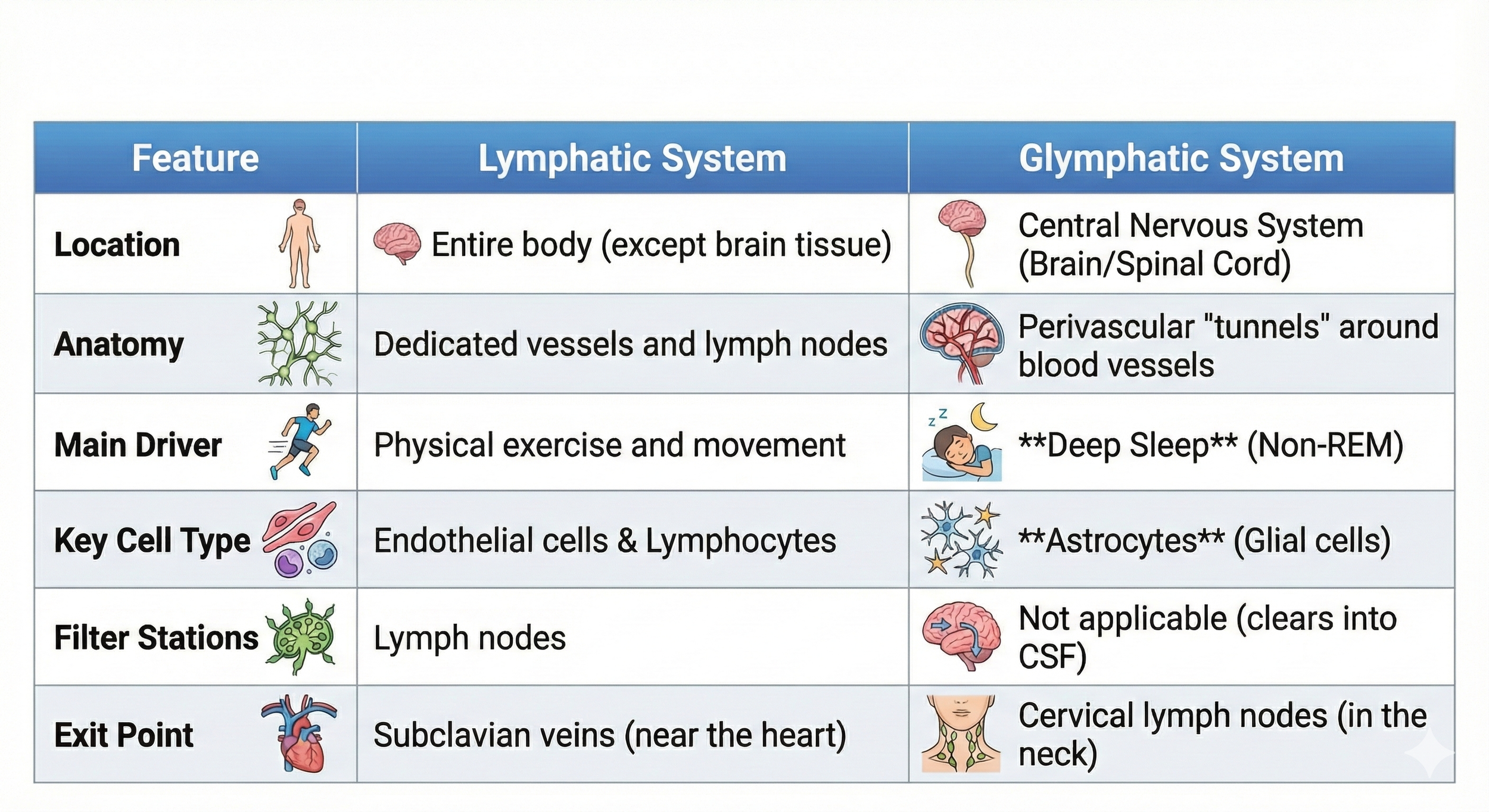
While both systems are responsible for clearing waste and maintaining fluid balance, they operate in different territories and under different biological rules.
The Lymphatic System
The Lymphatic System is a body-wide network of vessels, nodes, and organs. It acts as a secondary circulatory system that handles fluids that leak out of your blood vessels.
- Primary Fluid: Lymph (interstitial fluid, proteins, and fats).
- Key Components: Lymph nodes, spleen, thymus, and tonsils.
- Pumping Mechanism: Unlike the heart, it has no central pump. It relies on skeletal muscle movement, breathing, and one-way valves to move fluid.
- Primary Function: Immune surveillance, fat absorption from the gut, and maintaining fluid pressure in tissues.
The Glymphatic System
The Glymphatic System is a functional waste clearance pathway for the Central Nervous System (CNS). The "G" stands for Glia, the support cells of the brain that facilitate this process.
- Primary Fluid: Cerebrospinal Fluid (CSF) and Interstitial Fluid (ISF).
- Key Components: Perivascular spaces and Astrocytes (specifically the Aquaporin-4 water channels).
- Pumping Mechanism: Driven by arterial pulsation and the expansion/contraction of the brain's extracellular space during sleep.
- Primary Function: Clearing neurotoxic metabolic byproducts, specifically amyloid-beta and tau proteins.
Comparison