Lymphatic vs. Glymphatic
While both systems are responsible for clearing waste and maintaining fluid balance, they operate in different territories and under different biological rules.
The Lymphatic System
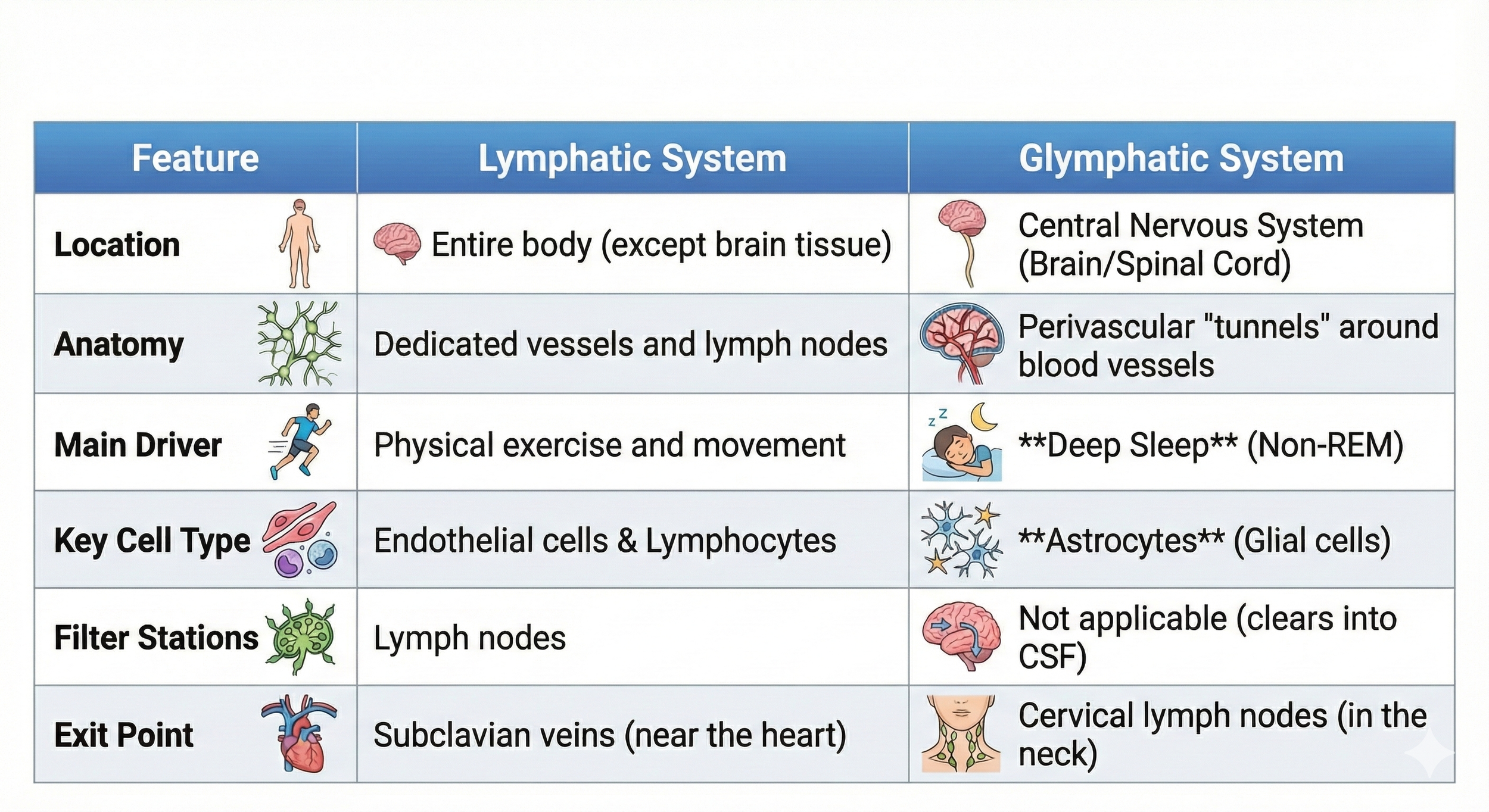
The Lymphatic System is a body-wide network of vessels, nodes, and organs. It acts as a secondary circulatory system that handles fluids that leak out of your blood vessels.
- Primary Fluid: Lymph (interstitial fluid, proteins, and fats).
- Key Components: Lymph nodes, spleen, thymus, and tonsils.
- Pumping Mechanism: Unlike the heart, it has no central pump. It relies on skeletal muscle movement, breathing, and one-way valves to move fluid.
- Primary Function: Immune surveillance, fat absorption from the gut, and maintaining fluid pressure in tissues.
The Glymphatic System
The Glymphatic System is a functional waste clearance pathway for the Central Nervous System (CNS). The "G" stands for Glia, the support cells of the brain that facilitate this process.
- Primary Fluid: Cerebrospinal Fluid (CSF) and Interstitial Fluid (ISF).
- Key Components: Perivascular spaces and Astrocytes (specifically the Aquaporin-4 water channels).
- Pumping Mechanism: Driven by arterial pulsation and the expansion/contraction of the brain's extracellular space during sleep.
- Primary Function: Clearing neurotoxic metabolic byproducts, specifically amyloid-beta and tau proteins.
Comparison
How They Work Together
The two systems are not independent; they are connected in a "relay race" to get toxins out of your head and out of your body.
- The Brain Flush: During deep sleep, the glymphatic system opens up. CSF rushes into the brain tissue, "washing" the metabolic waste away from neurons.
- The Transfer: This waste-filled fluid drains out of the brain via the meningeal lymphatic vessels—tiny channels located in the lining of the skull.
- The Hand-off: These vessels lead directly to the Cervical Lymph Nodes in your neck.
- The Final Disposal: Once the brain's waste enters the cervical lymph nodes, it is officially in the Peripheral Lymphatic System. It is then filtered and eventually dumped back into the blood to be excreted by the liver and kidneys.
Without a functional Glymphatic system, toxins build up in the brain (linked to Alzheimer's). Without a functional Lymphatic system, those toxins have nowhere to go once they leave the brain, causing a "backlog" of waste in the neck.
